MSFS
Nieuport 24 / 24bis ↗
A late member of the Nieuport V-strut scout family, remembered both as a First World War fighter and as an advanced trainer.
2 implementations+ Compare
Explore the aircraft. Find your simulator. Follow the sources.
A late member of the Nieuport V-strut scout family, remembered both as a First World War fighter and as an advanced trainer.
A twin-engine business jet designed to retain some of the utility flexibility associated with the PC-12.
A DC-10-derived tanker that combined aerial refuelling with passenger and cargo transport.
A four-seat composite touring and training aircraft developed from Diamond's smaller two-seater.
A low-wing agricultural Cessna with a cockpit and hopper arranged around the job.
A four-seat touring family whose Commander 114 added a larger engine and further refinements.
A Belgian light helicopter with two seats arranged side by side.
A small two-seat piston helicopter with a two-bladed main rotor.
A long-range twin whose programme emphasised composite construction and more electrically powered systems.
A hybrid-electric regional-airliner concept represented in the simulator while the real programme develops.
Japan’s postwar regional turboprop, with Rolls-Royce Dart power and a career spanning passenger, freight and specialist government flying.
The Model 525 CitationJet, the starting point of Cessna's CJ and M2 lineage.
A large twin-radial transport that carried heavy loads through wartime and post-war freight service.
A military liaison aircraft built around a high wing, tandem cabin and short-field utility work.
A five-seat composite single whose development led to the diesel DA50 RG.
A carbon-fibre aerobatic monoplane family with a dedicated air-racing branch.
A long-range strategic bomber with a swept wing and eight jet engines in paired pods.
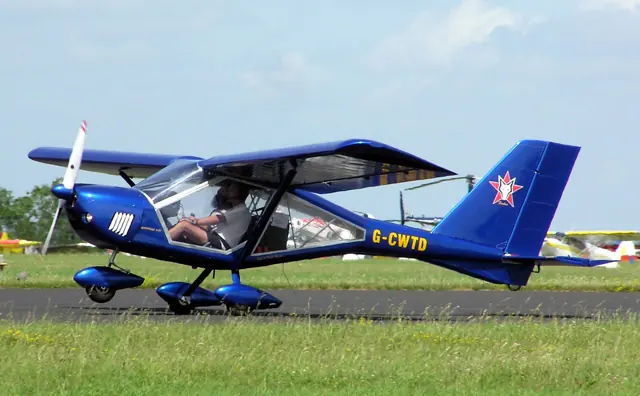
A high-wing light sport aircraft with a broad glazed cabin and tricycle landing gear.
A cabin biplane with the lower wing placed ahead of the upper one.
A two-seat composite light-aircraft family with a high wing and a compact enclosed cabin.
A two-seat, twin-engine fighter that served naval and land-based air forces in many roles.
An experimental twin-boom racing aircraft commissioned by Bob Pond and designed by Burt Rutan.
A two-seat amphibian with a flying-boat hull and a pusher engine above the cabin.
A stretched development of the DC-9 with rear-mounted engines and a five-abreast cabin.
New aircraft, useful sources and improvements to AirframeDB. Occasional updates, when there’s something to share.