X-Plane
Flight Design CTLS ↗
A composite two-seat light sport aircraft with an unobstructed cantilever high wing.
1 implementations+ Compare
Explore the aircraft. Find your simulator. Follow the sources.
A composite two-seat light sport aircraft with an unobstructed cantilever high wing.
A tandem-seat development of Scheibe’s touring motorglider family.
A two-seat powered hang-glider trike with an open cockpit.
A hybrid-electric regional-airliner concept represented in the simulator while the real programme develops.
The CJ4 belongs to Cessna's light-jet line, with two rear-mounted engines and a T-tail.
A purpose-built aerobatic monoplane family developed by pilot and designer Walter Extra.
The purpose-built Ryan monoplane used by Charles Lindbergh for his 1927 solo Atlantic crossing.
A military liaison aircraft built around a high wing, tandem cabin and short-field utility work.
Piper's two-seat trainer with fixed tricycle landing gear.
A four-engine airliner that brought pressurised-cabin travel into scheduled service.
A compact Australian wartime fighter built around a radial engine.
Tecnam's four-seat high-wing single, built with metal and carbon-fibre components.
A two-seat, twin-engine fighter that served naval and land-based air forces in many roles.
A simulated twin-turbine helicopter that explores no-tail-rotor anti-torque control.
A tandem-seat jet trainer that also found a second life in civilian display and racing.
A long-haul twin whose family spans passenger, freight and specialist transport roles.
A low-wing piston family that spans simple trainers, touring aircraft and retractable-gear Arrows.
A tandem two-seat sailplane family used for training and cross-country soaring.
A utility piston twin designed for commuter and specialist transport missions.
A short-haul jet family that evolved through several generations of engines, wings and flight decks.
A French two-seat aerobatic trainer with side-by-side seating and a distinctive curved wing outline.
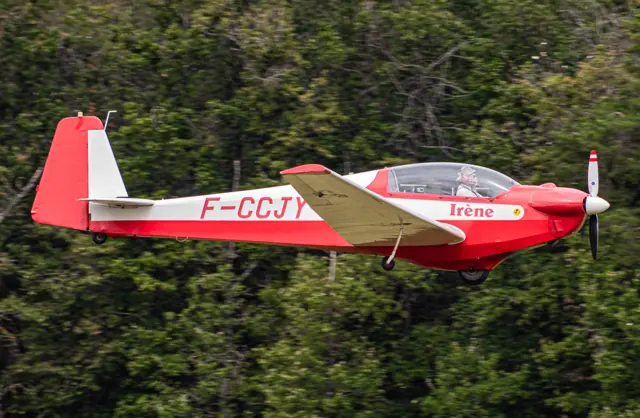
A two-seat touring motorglider with interchangeable wing tips.
A push-pull twin with one engine at each end of the central fuselage.
A stretched development of the DC-9 with rear-mounted engines and a five-abreast cabin.
New aircraft, useful sources and improvements to AirframeDB. Occasional updates, when there’s something to share.