MSFS
Grumman G-44 Widgeon ↗
Grumman’s small twin-engine amphibian: a flying boat with retractable wheels and a life spanning wartime service, private travel and seaplane training.
1 implementations+ Compare
Explore the aircraft. Find your simulator. Follow the sources.
Grumman’s small twin-engine amphibian: a flying boat with retractable wheels and a life spanning wartime service, private travel and seaplane training.
Two related Dutch regional jets developed from the F28 lineage.
A full-length double-deck airliner built for very high passenger capacity.
A compact Italian light twin with a shoulder wing and metal airframe.
A long-haul twin whose family spans passenger, freight and specialist transport roles.
A two-seat amphibian with a flying-boat hull and a pusher engine above the cabin.
A pioneering all-metal transport with an enclosed passenger cabin and corrugated skin.
A two-seat composite trainer with a low wing and a large canopy.
A twin-engine business jet designed to retain some of the utility flexibility associated with the PC-12.
A turbine-powered utility helicopter with a broad cabin and a long international service history.
A four-engine tactical transport built around a rear loading ramp and access to austere airfields.
A side-by-side military trainer with a low wing and fixed tricycle landing gear.
A five-seat composite single whose development led to the diesel DA50 RG.
A specialised reconnaissance aircraft designed for very high altitude and sustained supersonic flight.
A tandem-seat jet trainer that also found a second life in civilian display and racing.
A large twin-radial transport that carried heavy loads through wartime and post-war freight service.
The Wilga is the real-aircraft starting point for Mike Patey's DRACO and the simulator's DRACO X.
A modern utility single whose family includes both tailwheel and nosewheel configurations.
A narrow-body twin developed as a new generation of medium-range airliner.
A utility piston twin designed for commuter and specialist transport missions.
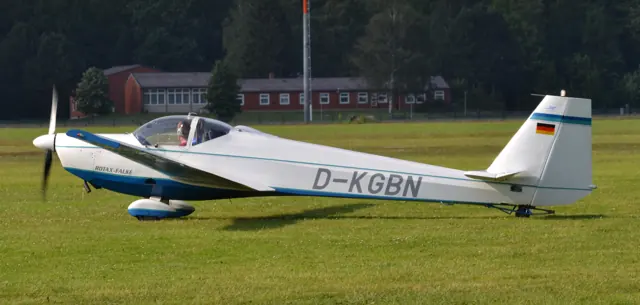
A side-by-side touring motorglider used for both powered flying and soaring.
The JetRanger and LongRanger family: a familiar turbine-helicopter shape with distinct cabin lengths.
A tandem-seat development of Scheibe’s touring motorglider family.
A twin-turboprop family whose smaller conventional-tail and larger T-tail branches have distinct identities.
New aircraft, useful sources and improvements to AirframeDB. Occasional updates, when there’s something to share.