MSFS X-Plane
North American T-6 Texan ↗
An advanced trainer known around the world as the Texan, Harvard and SNJ.
2 implementations+ Compare
Explore the aircraft. Find your simulator. Follow the sources.
An advanced trainer known around the world as the Texan, Harvard and SNJ.
A long-range twin whose programme emphasised composite construction and more electrically powered systems.
A DC-10-derived tanker that combined aerial refuelling with passenger and cargo transport.
A high-wing utility aircraft known for short-field work and a broad choice of working configurations.
A modern utility single whose family includes both tailwheel and nosewheel configurations.
A First World War trainer that became a familiar sight in the barnstorming era.
A modern open-cockpit light aircraft that revives the corrugated-metal style of the 1929 A50.
A four-engine tactical transport built around a rear loading ramp and access to austere airfields.
A pressurised twin turboprop with a canard, composite airframe and rear-facing propellers.
A stretched development of the DC-9 with rear-mounted engines and a five-abreast cabin.
The Wilga is the real-aircraft starting point for Mike Patey's DRACO and the simulator's DRACO X.
Pipistrel's streamlined four-seat composite-aircraft design.
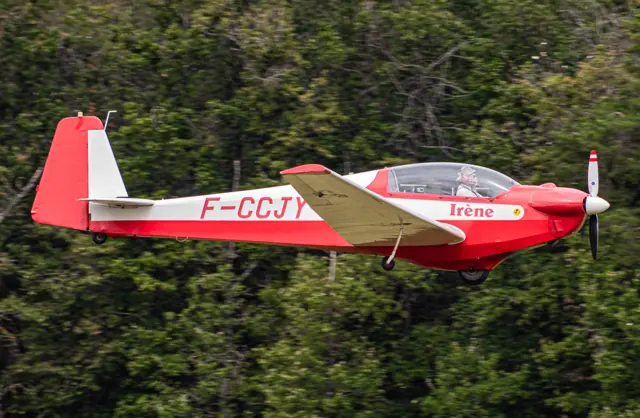
A tandem-seat development of Scheibe’s touring motorglider family.
A pressurised regional airliner with a high wing and two Rolls-Royce Dart turboprops.
A utility piston twin designed for commuter and specialist transport missions.
An open, single-seat ultralight with its propeller behind the pilot.
A twin-engine utility helicopter with roots in the BK 117 and EC145 families.
A family of single-aisle airliners built around sidesticks, electronic flight controls and a shared cockpit.
A long-range fighter whose different engine and canopy developments produced several distinct forms.
The Huey: a turbine-powered utility helicopter with a broad cabin and an unmistakable two-bladed rotor.
A large long-haul twin that introduced Boeing's first commercial fly-by-wire airliner flight controls.
A small twin-engine amphibian that moved from business transport into military and utility service.
A two-seat amphibian with a flying-boat hull and a pusher engine above the cabin.
A twin-engine business jet designed to retain some of the utility flexibility associated with the PC-12.
New aircraft, useful sources and improvements to AirframeDB. Occasional updates, when there’s something to share.