MSFS
Lockheed T-33 Shooting Star ↗
Lockheed's tandem-seat Shooting Star jet trainer.
1 implementations+ Compare
Explore the aircraft. Find your simulator. Follow the sources.
Lockheed's tandem-seat Shooting Star jet trainer.
A late member of the Nieuport V-strut scout family, remembered both as a First World War fighter and as an advanced trainer.
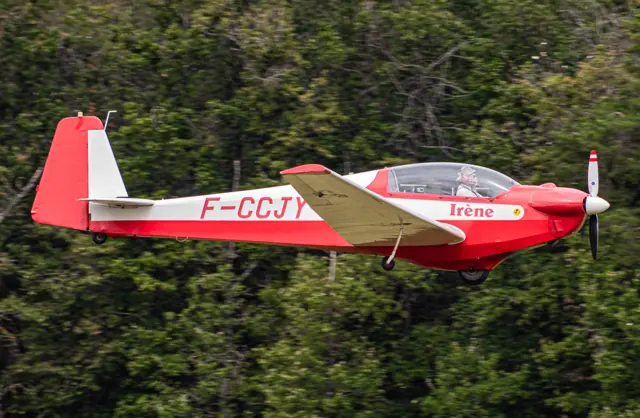
A tandem-seat development of Scheibe’s touring motorglider family.
RotorWay's two-seat kit-helicopter family, with piston and turbine simulator interpretations.
Diamond's four-seat light twin, developed with diesel-powered versions.
A close-air-support aircraft with a straight wing, twin tail and two widely separated jet engines.
A huge wooden flying-boat prototype that made one brief flight in 1947.
A four-bladed utility helicopter developed from the LongRanger lineage.
A twin-turboprop regional airliner developed through Swedish and American industrial cooperation.
A small twin-engine amphibian that moved from business transport into military and utility service.
A carrier-capable multirole fighter, larger than the earlier Hornet from which it developed.
A late-1930s cabin aircraft with metal construction and retractable landing gear.
A Belgian light helicopter with two seats arranged side by side.
Two related Dutch regional jets developed from the F28 lineage.
A long-range fighter whose different engine and canopy developments produced several distinct forms.
A long-range strategic bomber with a swept wing and eight jet engines in paired pods.
An enlarged Velocity kit aircraft with a canard and rear-mounted pusher propeller.
A composite two-seat light sport aircraft with an unobstructed cantilever high wing.
The tip-tanked turbofan Learjets, combining the classic compact airframe with longer range and careers in business, military and medical flying.
A two-seat composite light-aircraft family with a high wing and a compact enclosed cabin.
A pressurised single-engine turboprop family that combines a compact cabin with retractable gear.
A compact Japanese twin turboprop with a high wing and pressurised cabin.
A long-range twin whose programme emphasised composite construction and more electrically powered systems.
A 1920s transport family that developed from a single-engine airliner into a trimotor.
New aircraft, useful sources and improvements to AirframeDB. Occasional updates, when there’s something to share.