MSFS X-Plane
Beechcraft King Air family ↗
A twin-turboprop family whose smaller conventional-tail and larger T-tail branches have distinct identities.
7 implementations+ Compare
Explore the aircraft. Find your simulator. Follow the sources.
A twin-turboprop family whose smaller conventional-tail and larger T-tail branches have distinct identities.
A compact aerobatic biplane family with both single-seat and tandem-seat branches.
A utility-aircraft family whose stretched 207 branch trades compact proportions for more cabin space.
A very light twin jet developed from the Eclipse 500.
A regional turboprop family whose short early versions and larger Q400 have different proportions and systems.
A French two-seat aerobatic trainer with side-by-side seating and a distinctive curved wing outline.
A wartime fighter developed from the earlier Curtiss P-36.
A four-seat, pressurised kit aircraft with a composite airframe and retractable landing gear.
The Stationair utility family, combining a high wing with fixed landing gear.
A light amphibian with a hull, retractable wheels and a pusher propeller.
A modern open-cockpit light aircraft that revives the corrugated-metal style of the 1929 A50.
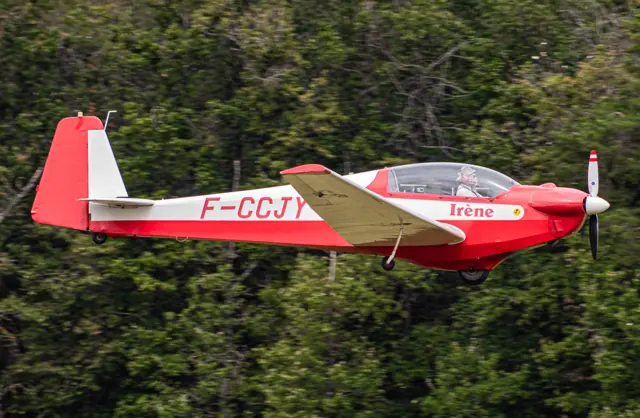
A tandem-seat development of Scheibe’s touring motorglider family.
A powered hang-glider wing above an amphibious inflatable boat.
A two-seat composite kit aircraft developed from the Lancair 320.
The purpose-built Ryan monoplane used by Charles Lindbergh for his 1927 solo Atlantic crossing.
A four-engine Airbus wide-body developed in parallel with the A330.
A single-seat aerobatic monoplane that also became a familiar air-racing aircraft.
A twin-turboprop utility aircraft developed by Reims Aviation with Cessna.
A two-seat composite trainer with a low wing and a large canopy.
A full-length double-deck airliner built for very high passenger capacity.
A jet-powered military transport designed for both strategic loads and tactical airfield access.
A British jet trainer with tandem seating and a long military training career.
A compact regional turboprop with a pressurised cabin for up to 19 passengers.
A heavy transport helicopter whose two large rotors remove the need for a tail rotor.
New aircraft, useful sources and improvements to AirframeDB. Occasional updates, when there’s something to share.