MSFS
Fokker F.VII ↗
A 1920s transport family that developed from a single-engine airliner into a trimotor.
2 implementations+ Compare
Explore the aircraft. Find your simulator. Follow the sources.
A 1920s transport family that developed from a single-engine airliner into a trimotor.
An advanced trainer known around the world as the Texan, Harvard and SNJ.
A First World War trainer that became a familiar sight in the barnstorming era.
Japan’s postwar regional turboprop, with Rolls-Royce Dart power and a career spanning passenger, freight and specialist government flying.
An experimental French helicopter with two coaxial, counter-rotating rotors.
A four-seat piston helicopter with a two-blade main rotor and conventional tail rotor.
A long-range fighter whose different engine and canopy developments produced several distinct forms.
A Belgian light helicopter with two seats arranged side by side.
A low-wing piston twin that carries the Beechcraft touring-aircraft lineage into two-engine flying.
A simulator-designed very light jet using the Citation Mustang as a reference.
SOCATA's touring-aircraft family, including the Tobago and Trinidad.
An Italian light aircraft known for military training and aerobatic use.
TorqueSim's Pocket Rocket, a simulated PT6-powered light aircraft with two gear layouts.
The JetRanger and LongRanger family: a familiar turbine-helicopter shape with distinct cabin lengths.
A pressurised four-engine piston transport from the last major generation before the jet airliner.
A compact aerobatic biplane family with both single-seat and tandem-seat branches.
A high-wing utility turboprop designed for short-field passenger and cargo work.
The Huey: a turbine-powered utility helicopter with a broad cabin and an unmistakable two-bladed rotor.
A corrugated-metal, three-engine transport from the formative years of airline travel.
A twin-radial airliner that helped make practical passenger transport a regular business.
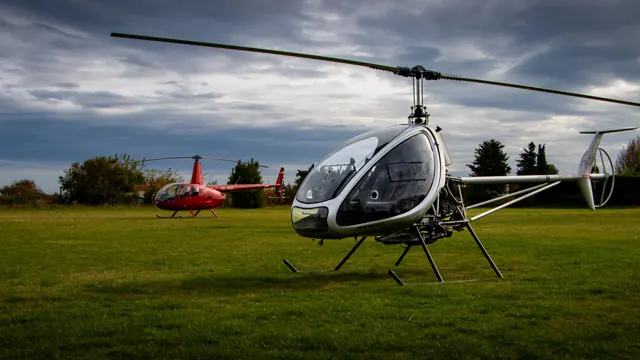
A light two-seat helicopter with a side-by-side cabin and a semi-rigid main rotor.
The purpose-built Ryan monoplane used by Charles Lindbergh for his 1927 solo Atlantic crossing.
A compact two-seat light aircraft with a high wing and a wide range of development variants.
A cabin biplane with the lower wing placed ahead of the upper one.
New aircraft, useful sources and improvements to AirframeDB. Occasional updates, when there’s something to share.