MSFS X-Plane
Douglas DC-3 ↗
A twin-radial airliner that helped make practical passenger transport a regular business.
3 implementations+ Compare
Explore the aircraft. Find your simulator. Follow the sources.
A twin-radial airliner that helped make practical passenger transport a regular business.
A two-seat light aircraft with folding wings and a choice of nosewheel or tailwheel gear.
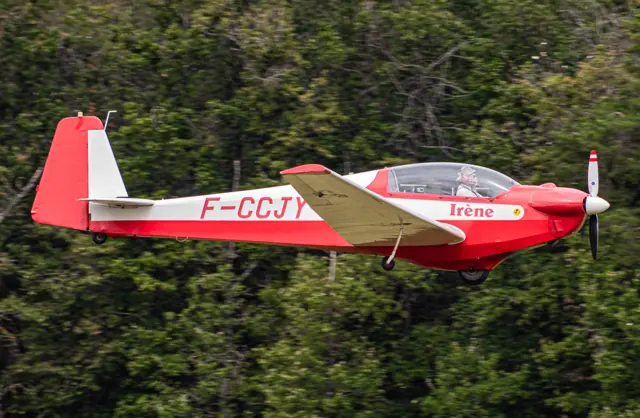
A tandem-seat development of Scheibe’s touring motorglider family.
The fixed-gear, six-cylinder touring branch of Piper's PA-28 family.
Pipistrel's streamlined four-seat composite-aircraft design.
A slender supersonic trainer with tandem seats and two small afterburning turbojets.
A modern medium twin-engine helicopter developed as a successor to the Dauphin line.
A two-seat training single with a high wing and fixed tricycle landing gear.
A specialised reconnaissance aircraft designed for very high altitude and sustained supersonic flight.
A regional jet family with four small engines, a high wing and a large split tail airbrake.
A pioneering light helicopter whose bubble cabin and exposed structure became widely recognisable.
SOCATA's touring-aircraft family, including the Tobago and Trinidad.
An early CRJ regional jet with rear-mounted engines and a small airliner flight deck.
A box-shaped utility twin whose cabin and rear access are central to its design.
Embraer's regional-jet family, from the ERJ 135 to the longer ERJ 145.
The second-generation Harrier, designed around vectored thrust and short-field operation.
The retractable member of Beechcraft’s Musketeer family: a roomy, four-cylinder travelling aircraft with an unusually large baggage door.
An advanced trainer known around the world as the Texan, Harvard and SNJ.
An experimental French helicopter with two coaxial, counter-rotating rotors.
An enclosed gyroplane represented in VSKYLABS’ X-Plane fleet.
A compact Japanese twin turboprop with a high wing and pressurised cabin.
A purpose-built agricultural aircraft that also became a single-engine air tanker.
A swept-wing business jet designed around high subsonic cruise speed.
The purpose-built Ryan monoplane used by Charles Lindbergh for his 1927 solo Atlantic crossing.
New aircraft, useful sources and improvements to AirframeDB. Occasional updates, when there’s something to share.