MSFS
Cessna Citation CJ4 ↗
The CJ4 belongs to Cessna's light-jet line, with two rear-mounted engines and a T-tail.
2 implementations+ Compare
Explore the aircraft. Find your simulator. Follow the sources.
The CJ4 belongs to Cessna's light-jet line, with two rear-mounted engines and a T-tail.
A short-haul jet family that evolved through several generations of engines, wings and flight decks.
A carrier-capable multirole fighter, larger than the earlier Hornet from which it developed.
A super-midsize business jet with a swept wing, rear-mounted engines and an integrated glass cockpit.
Pipistrel's streamlined four-seat composite-aircraft design.
A very large single-engine biplane designed for practical work from modest airfields.
A medium commercial helicopter designed for passenger and utility transport.
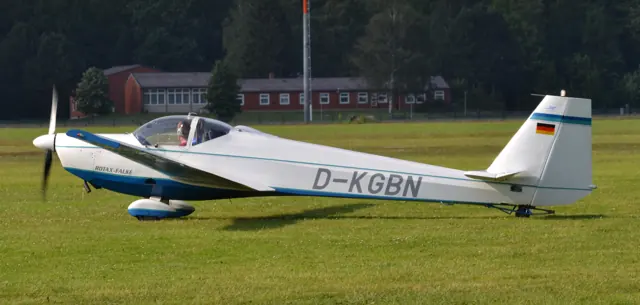
A two-seat touring motorglider with interchangeable wing tips.
A long-running touring single, familiar in both V-tail and conventional-tail forms.
A side-by-side touring motorglider used for both powered flying and soaring.
A tandem two-seat sailplane family used for training and cross-country soaring.
A two-seat naval fighter with variable-sweep wings and a cockpit built around pilot and radar-intercept officer roles.
A two-seat amphibian with a flying-boat hull and a pusher engine above the cabin.
The tip-tanked turbofan Learjets, combining the classic compact airframe with longer range and careers in business, military and medical flying.
A modern utility single whose family includes both tailwheel and nosewheel configurations.
A light two-seat helicopter with a side-by-side cabin and a semi-rigid main rotor.
A tandem two-seat sailplane designed for instruction and broader soaring use.
A tandem-seat development of Scheibe’s touring motorglider family.
A compact Japanese twin turboprop with a high wing and pressurised cabin.
The turboprop-powered member of Beechcraft’s tandem-seat Mentor training family.
The purpose-built Ryan monoplane used by Charles Lindbergh for his 1927 solo Atlantic crossing.
A specialised reconnaissance aircraft designed for very high altitude and sustained supersonic flight.
A twin-engine business jet designed to retain some of the utility flexibility associated with the PC-12.
A three-engine airliner that became a mainstay of Soviet and Russian passenger transport.
New aircraft, useful sources and improvements to AirframeDB. Occasional updates, when there’s something to share.