MSFS
Hughes H-4 Hercules ↗
A huge wooden flying-boat prototype that made one brief flight in 1947.
2 implementations+ Compare
Explore the aircraft. Find your simulator. Follow the sources.
A huge wooden flying-boat prototype that made one brief flight in 1947.
A utility piston twin designed for commuter and specialist transport missions.
A slender supersonic trainer with tandem seats and two small afterburning turbojets.
A two-seat light amphibian with a compact boat hull and a pusher propeller.
The purpose-built Ryan monoplane used by Charles Lindbergh for his 1927 solo Atlantic crossing.
A two-seat light aircraft with folding wings and a choice of nosewheel or tailwheel gear.
The second-generation Harrier, designed around vectored thrust and short-field operation.
Lockheed's wide-body TriStar, with three RB211 engines and a distinctive tail intake.
A long-range strategic bomber with a swept wing and eight jet engines in paired pods.
A vast inter-war flying boat with twelve engines arranged in six paired installations.
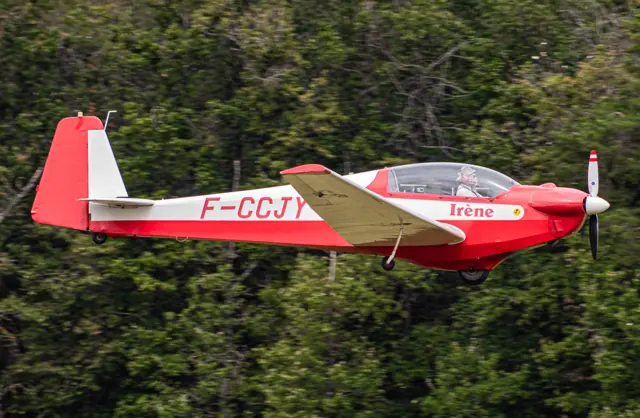
A tandem-seat development of Scheibe’s touring motorglider family.
A small two-seat piston helicopter with a two-bladed main rotor.
A late member of the Nieuport V-strut scout family, remembered both as a First World War fighter and as an advanced trainer.
The retractable member of Beechcraft’s Musketeer family: a roomy, four-cylinder travelling aircraft with an unusually large baggage door.
A late-1930s cabin aircraft with metal construction and retractable landing gear.
A long-range fighter whose different engine and canopy developments produced several distinct forms.
A radial-engined light transport whose long career covered passengers, freight and military training.
A wooden touring-aircraft family recognisable by the upward-angled outer wing panels.
The four-engine Flying Fortress, a major American bomber of the Second World War.
A two-seat naval fighter with variable-sweep wings and a cockpit built around pilot and radar-intercept officer roles.
A utility-aircraft family whose stretched 207 branch trades compact proportions for more cabin space.
A corrugated-metal transport best known in its three-engine form.
A two-seat amphibian with a flying-boat hull and a pusher engine above the cabin.
A stretched development of the DC-9 with rear-mounted engines and a five-abreast cabin.
New aircraft, useful sources and improvements to AirframeDB. Occasional updates, when there’s something to share.